

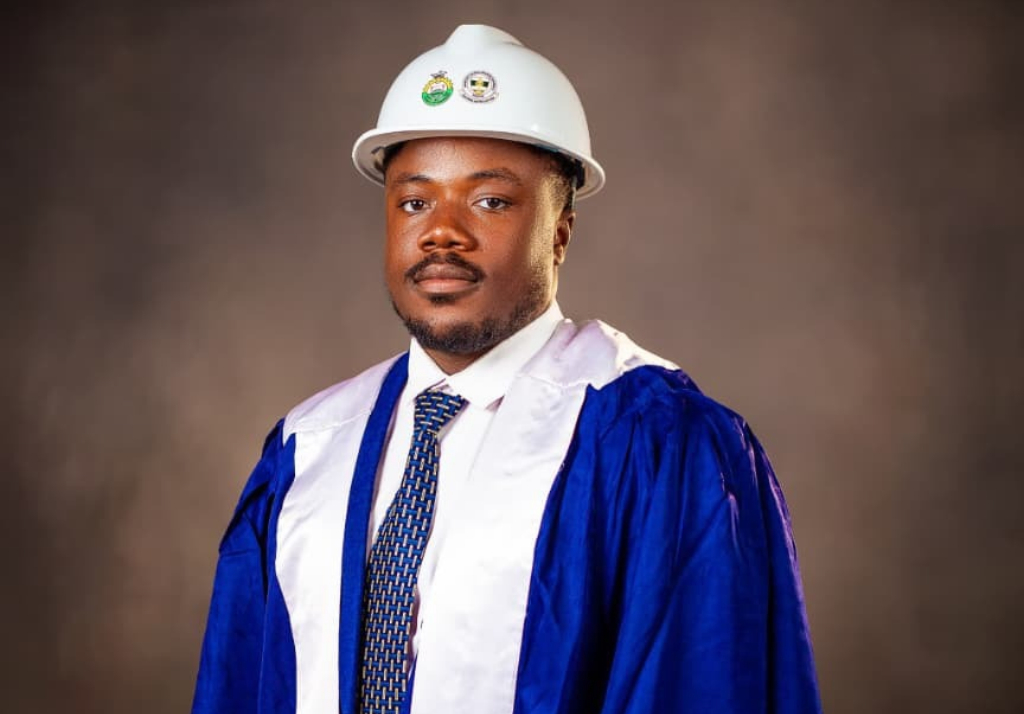
ThankGod Chibuike Nnamoko: Advancing Student Sports Leadership at ATBU and Beyond
From serving two terms as Director of Sports at Abubakar Tafawa Balewa University to championing student sports leadership through NUGA and FISU, Engr. ThankGod Chibuike Nnamoko has built a record of service centred on sports development, institutional growth, inclusion and leadership.
ThankGod Chibuike Nnamoko, born on 5th June 2002, is an engineering graduate, student leader and university sports administrator whose contributions have extended from the campus community of Abubakar Tafawa Balewa University (ATBU), Bauchi, to the wider Nigerian university sports system. Widely known as TK, Nnamoko holds a degree in Computer and Communication Engineering and is a Graduate Member of the Nigerian Society of Engineers (GMNSE).
His leadership journey reflects the intersection of engineering, student governance, sports administration and advocacy. Through his tenure as Director of Sports of the ATBU Students' Union Government (SUG), his service as a NUGA-appointed FISU Student Ambassador to Nigeria, and his initiative to establish the first NUGA Leadership Summit, Nnamoko has worked to strengthen sporting opportunities, encourage student participation and promote a more structured approach to university sports leadership.
A Foundation in Student Leadership and Governance
Nnamoko's leadership experience is rooted in student representation and institutional service. He was elected Director of Sports of the ATBU Students' Union Government twice, receiving a renewed mandate from the student body to oversee sports development and related activities on campus.
Serving two terms provided an opportunity to pursue sustained initiatives rather than treat sports administration as a series of isolated events. His work combined competition organisation, facility improvement, the introduction of sporting disciplines, fitness programming, athlete recognition and initiatives aimed at broadening participation.
Beyond his responsibilities in sports, Nnamoko serves as Secretary of the NUESA ATBU Electoral Committee. In this capacity, he has contributed to the conduct of credible student elections and the preparation of the documents, procedures and administrative processes that support electoral activities. He is also actively involved in the Faculty of Engineering and Engineering Technology (FEET), maintaining his engagement with the academic and student leadership community.
These responsibilities illustrate the range of his involvement in university life, spanning sports administration, electoral governance and faculty activities.
Transforming Sports at ATBU Through Programmes and Opportunities
During his two-year tenure as Director of Sports, Nnamoko pursued a programme of sporting activities designed to create more opportunities for students to participate, compete and develop their abilities.
A major aspect of his administration was the organisation of competitions that brought students together through structured sporting events. These included the SWEP Cup 2025, the inaugural Inter-Faculty Games 2025, and the first and second editions of the Campus Super Cup. His administration also organised Prof. Bawa's Chess and Scrabble Championship, providing opportunities for students to participate in intellectual sports alongside more physically demanding disciplines.
The range of these competitions reflected an approach to sports development that extended beyond a single event or sporting category. By supporting different formats of competition, the administration created additional avenues for student engagement and campus sporting activity.
Nnamoko also introduced new sporting opportunities at ATBU, including the establishment of a Scrabble Club and a Handball Team. These initiatives broadened the range of activities available to students and contributed to the development of sporting interests beyond the university's existing offerings.
Improving Facilities and Building a Campus Fitness Culture
Recognising the importance of sporting infrastructure to participation and performance, Nnamoko's tenure also included the repair and restoration of the university's basketball court. The intervention addressed an important aspect of campus sports development: the need for usable facilities that allow students to train, compete and participate in organised sporting activities.
His administration further established the KEEPFIT Running Club, which holds sessions three times a week at the Gubi Campus Sports Stadium. The club created a regular platform for running and fitness, encouraging students to make physical activity part of their campus routines.
The emphasis on fitness also extended to health awareness. Nnamoko's administration delivered the ATBU Keep-Fit and Medical Outreach, bringing fitness and medical outreach together as part of its broader engagement with student wellbeing.
In addition, the administration organised the ATBU Sports Award to recognise outstanding athletes. Athlete recognition is an important component of sports development, offering an opportunity to acknowledge performance and celebrate the dedication of students who represent their university through sport.
Taken together, the running club, medical outreach, facility restoration and sports awards demonstrate the breadth of the initiatives undertaken during his tenure, combining participation, infrastructure, fitness and recognition.
Advancing Female Participation in University Sports
A notable aspect of Nnamoko's work as Director of Sports was his attention to female participation in sports. His administration supported female sports initiatives, including inter-campus football competitions organised during the SUG weeks of 2025 and 2026.
These competitions provided an avenue for female students to participate in organised football and contributed to efforts to widen women's involvement in campus sports.
The focus on participation also connects with Nnamoko's wider advocacy for university sports. During his subsequent service as a FISU Student Ambassador, he continued to promote stronger participation by female students in sports across Nigerian universities. This continuity between his campus-level initiatives and national advocacy reflects a consistent interest in making university sports more inclusive and accessible.
ATBU's Progress at the NUGA Games
One of the major achievements associated with Nnamoko's tenure was ATBU's improved performance at the Nigerian University Games Association (NUGA) Games.
At the 26th NUGA Games, ATBU finished 41st on the medal table, winning two silver medals. At the 27th NUGA Games, hosted by the University of Jos in 2025, the university climbed to 24th position, moving up 17 places.
The university won a total of 12 medals: three gold, two silver and seven bronze. This represented a substantial increase from its previous medal haul of two, bringing its total to six times the earlier figure.
The improvement was attributed to deliberate investment and regular inter-faculty competitions, highlighting the importance of consistent preparation and opportunities for athletes to compete ahead of major university sporting events.
ATBU's progress provided a significant marker of the sporting outcomes recorded during this period. The movement from 41st to 24th place, alongside the increase in medals, illustrated the potential for improved performance when sporting activities are supported by deliberate planning and regular competition.
For Nnamoko, whose responsibilities included organising competitions and expanding sporting opportunities within the university, the performance formed an important part of the record of his two-year administration.
From Campus Leadership to the FISU Student Ambassador Role
Nnamoko's work extended beyond ATBU through his service as the FISU Student Ambassador to Nigeria, an appointment made through NUGA.
The International University Sports Federation (FISU) promotes university sport internationally, and the Student Ambassador role provided a platform for Nnamoko to advocate for stronger student participation and greater recognition of university sports.
As ambassador, he promoted the values of university sport nationwide and advocated for increased participation by female students in sports across Nigerian universities. His work reflected the view that university sport can contribute not only to athletic development but also to student engagement, leadership and institutional connection.
The ambassadorial role also informed one of his most significant contributions to the wider university sports community: the conception and championing of the first NUGA Leadership Summit.
The First NUGA Leadership Summit: Building the Next Generation of Sports Leaders
Among Nnamoko's contributions to university sports leadership is his initiative to establish the first NUGA Leadership Summit.
Conceived and championed as part of his FISU Student Ambassador action plan, the summit brought together student sports leaders from universities that attended the 25th NUGA Games at the University of Jos.
The gathering created a platform for student sports administrators from different universities to exchange ideas, share experiences, build professional networks and consider ways to strengthen the leadership structures supporting university sports in Nigeria.
Student sports leaders occupy an important position in the university sports ecosystem. They help connect athletes with institutions, coordinate sporting activities and represent student interests within university structures. Providing these leaders with opportunities to interact beyond their individual campuses can encourage the exchange of practices, strengthen relationships and support a more connected university sports community.
The NUGA Leadership Summit was significant in creating a space for that interaction. Its emphasis extended beyond competition results to the people and leadership structures responsible for organising, managing and sustaining university sports.
For Nnamoko, the initiative represented an opportunity to translate his ambassadorial responsibilities into a platform with value for student sports administrators beyond his own university. It also reflected his interest in developing future leaders and strengthening the institutional foundations of university sport.
The summit stands as a contribution to NUGA's wider community, demonstrating how student leadership can support collaboration, knowledge-sharing and the development of the next generation of sports administrators.
A Vision for Inclusive and Professionally Managed University Sports
At the centre of Nnamoko's work is a vision of university sports that is inclusive, professionally managed and capable of serving as a pathway for talent development, leadership and national pride.
This vision encompasses the different dimensions of his experience: organising campus competitions, supporting new sporting disciplines, improving facilities, establishing regular fitness activities, recognising athletes, promoting female participation and advocating for student sports leadership.
His work also reflects an understanding that university sports development requires more than athletes and competitions alone. It depends on the structures, programmes, administrators and opportunities that enable students to participate and progress.
Nnamoko remains committed to mentoring incoming student sports leaders and supporting NUGA's mission. This commitment extends the focus of his leadership beyond his own tenure, recognising the importance of continuity, experience-sharing and the preparation of students who will take on sports administration responsibilities in the future.
Looking Ahead
From his two-term service as Director of Sports at ATBU to his role as a FISU Student Ambassador and his initiative to establish the first NUGA Leadership Summit, ThankGod Chibuike Nnamoko's journey reflects a sustained engagement with university sports development and student leadership.
His record encompasses competition organisation, the introduction of new sporting opportunities, fitness and health initiatives, facility improvement, female participation, improved NUGA Games performance and the creation of a platform for student sports leaders to connect and learn from one another.
As he transitions from his tenure as Director of Sports, his experience offers a reminder that the development of university sports depends not only on the achievements recorded on the field of play but also on the leadership, planning and collaborative structures that make those achievements possible.
Through his continued commitment to mentoring future student sports administrators and supporting NUGA's mission, Nnamoko looks towards a university sports environment in which students have greater opportunities to participate, leaders are better equipped to serve, and sport remains a pathway to talent, leadership and national pride.
Comments (0)